Landscaping

Turning Plans Into Outdoor Spaces That Thrive
Landscaping is where the design meets the dirt. It’s the physical work of transforming a plan into a functioning outdoor space — installing plants, preparing soil, setting irrigation, building beds, and everything else that goes into a complete landscape. In Southwest Florida, that work has to account for a climate and soil profile that are unlike most of the country. Sandy soil drains fast but holds nutrients poorly. Summers bring intense heat and heavy rain. Moreover, the sun here can burn through tender new plantings within days if the installation isn’t done correctly.
Arrow Landscaping & Designs provides landscaping for residential and commercial properties throughout Fort Myers, Naples, and the surrounding communities. We handle both new installations and landscape renovations. Additionally, we work with plants that perform well in Zone 10’s climate rather than fighting it.
Landscaping vs. Landscape Design: What’s the Difference?
It’s worth clarifying because many homeowners use the terms interchangeably.
Landscape design is the planning phase. It answers what should go where and why. Design determines the plant palette, layout, irrigation strategy, and how the space will evolve over time.
Landscaping is the installation and execution phase. It’s the physical work of preparing soil, planting, mulching, setting irrigation, and completing every other task required to bring the design to life.
Most projects need both. However, they’re separate steps, and different skillsets handle them. Design requires an eye for layout and plant behavior. Landscaping requires the equipment, labor, and site experience to install correctly.
At Arrow, we handle both — but this page focuses on the installation and renovation side.
What Our Landscaping Service Includes
Every project is different, but a full landscaping job typically involves several stages.
1. Site Preparation
Before anything gets planted, the ground has to be ready. On Southwest Florida properties, this usually means:
-
Removing existing vegetation — Clearing weeds, invasive plants, or unwanted turf
-
Adjusting soil — Amending sandy soil with organic matter to improve nutrient and water retention
-
Grading — Ensuring proper drainage away from structures
-
Setting bed edges — Defining planting beds so they hold their shape
2. Irrigation Installation
A landscape is only as good as the water system behind it. We design and install irrigation that matches the plants going in — zones for different water needs, efficient emitters, and controls that minimize waste.
3. Plant Installation
Plants go in according to the design plan. Spacing accounts for mature size, root balls are set at proper depth, and soil is backfilled correctly. In Southwest Florida, this step also includes mulching, which helps with moisture retention and weed control.
4. Hardscape Coordination
If the plan includes patios, walkways, or retaining walls, we build those elements in coordination with the planting. Because of this, the final result stays cohesive rather than looking like separate projects stitched together.
5. Sod Installation
Where turf is planned, we install sod that fits the site — sun or shade, traffic level, and soil conditions.
6. Cleanup and Walkthrough
We clean up the site and walk through the finished work with you. If anything needs adjustment, we handle it before we leave.
Installation with Florida-Friendly Principles
Florida-Friendly Landscaping™ emphasizes putting the right plant in the right place, watering efficiently, and fertilizing appropriately. Those principles show up in the way we install every landscape.
Right plant, right place. Plant selection during installation has to match the site’s sun exposure, water availability, and soil conditions. A plant that needs full sun and good drainage won’t perform in a shaded, low-lying bed — no matter how well it’s planted.
Water efficiency. We group plants with similar water needs in the same irrigation zones. This keeps plants healthy without over-watering the ones that prefer drier conditions.
Soil preparation. Sandy soil that dominates much of Southwest Florida needs organic amendment to hold nutrients and moisture. Skipping this step during installation means plants struggle for years.
Mulching. A proper mulch layer helps retain moisture, moderates soil temperature, and suppresses weeds. It’s a small detail that makes a large difference.
Yard waste recycling. We handle green waste responsibly, including chipping brush and returning mulch to the site where appropriate.
What We Install
Our landscaping services cover the full range of outdoor installations.
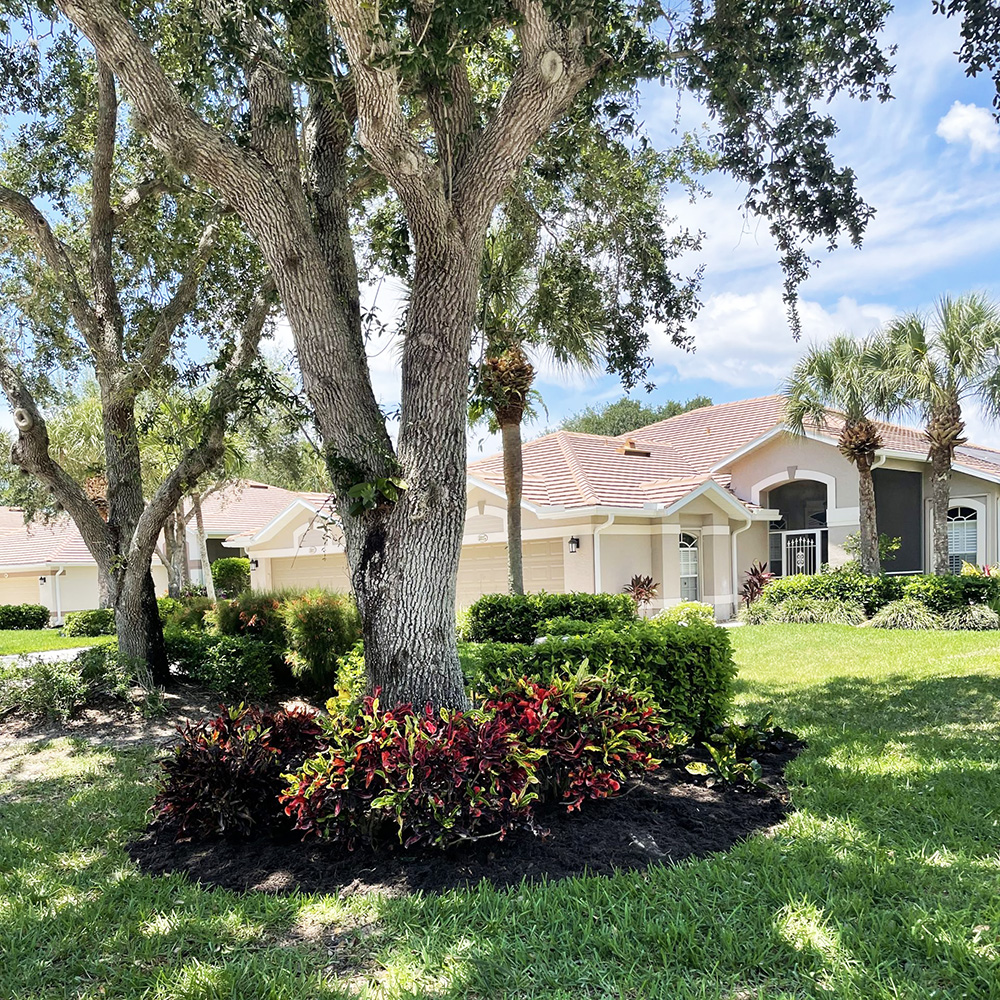
Plantings — Trees, palms, shrubs, ornamental grasses, flowering perennials, and groundcovers, all selected for the site’s conditions.
Native species — Sabal Palmetto, Gumbo Limbo, Sea Grape, Muhly Grass, Cocoplum, Firebush, and other natives that thrive in Zone 10.
Turf — Sod installation for lawns, including varieties suited to sun and shade.
Bed preparation — Soil amendments, edging, and mulch for new or renovated beds.
Irrigation — Drip, spray, and multi-zone systems designed for efficiency.
Drainage solutions — Grading and drainage work to move water away from structures.
Hardscape elements — When a project requires hardscaping, we coordinate patios, walkways, and retaining walls with the landscape.
Landscape Renovation
Not every project starts with a blank slate. Many homeowners come to us with landscapes that have declined over time — overgrown shrubs, dying trees, failed irrigation, or plantings that never thrived because they were wrong for the site.
Landscape renovation involves:
-
Removing failing plant material — Plants that don’t fit the site or have declined beyond saving
-
Reworking soil and drainage — Correcting problems that caused the decline in the first place
-
Updating irrigation — Replacing inefficient or failing systems
-
Replanting with better selections — Choosing species that will thrive in the actual conditions
-
Refreshing mulch and bed lines — Restoring the visual structure of the landscape
Renovation often delivers more impact than a full replacement. That’s because it keeps the elements that are working while correcting the ones that aren’t.
Residential Landscaping
Homeowners schedule landscaping projects for a variety of reasons:
-
A new home that needs a full landscape installed
-
An older landscape that’s overdue for a renovation
-
Adding privacy screening or shade trees
-
Replacing failing turf with low-water plantings
-
Creating outdoor living spaces that integrate with the yard
-
Improving curb appeal before selling
We work carefully around existing features — pools, irrigation, fences, and hardscape — so the rest of the property stays intact during the work.
Commercial Landscaping
For commercial properties, landscaping affects first impressions, maintenance costs, and even stormwater management. Whether you manage an HOA, an apartment complex, a retail center, or an office park, the quality of the landscape reflects on the business.
How we help commercial clients:
-
New landscape installations — Full installs for new construction or major renovations
-
Landscape upgrades — Replacing failing plant material with species that perform better long-term
-
Irrigation efficiency upgrades — Systems designed to reduce water use and maintenance costs
-
Coordination with property managers — Scheduling work to minimize disruption to tenants and customers
We work within community guidelines and can coordinate with landscape maintenance contractors once the installation is complete.
Frequently Asked Questions About Landscaping
What's the difference between landscaping and landscape design?
Landscape design focuses on planning — determining what to plant, where to place it, and how the space will function. Landscaping refers to the physical installation and renovation work that brings the design to life. Most projects involve both.
Do I need a design before I can get landscaping done?
For small projects — replacing a few plants or redoing a single bed — design may not be necessary. For larger installations or renovations, having a design ensures the plantings will work together and perform over time.
How long does a landscaping project take?
It depends on the scope. A small renovation may take a few days. A full landscape installation for a new home can take several weeks depending on size, plant availability, and weather.
Can you work with plants I already have?
Yes. We often incorporate existing, healthy plant material into renovation work. If existing plants don’t fit the site or the new design, we can advise on whether to relocate or remove them.
How do you handle irrigation?
We install irrigation systems that match the plants going in. Zones are grouped by water need so plants get the water they need without over-watering others. For existing systems, we can evaluate whether they should be updated.
Do you offer ongoing maintenance after installation?
Contact us to discuss maintenance options. Even if maintenance isn’t part of the original project, we can advise on what the new landscape will need in the first year.