
Stump Grinding

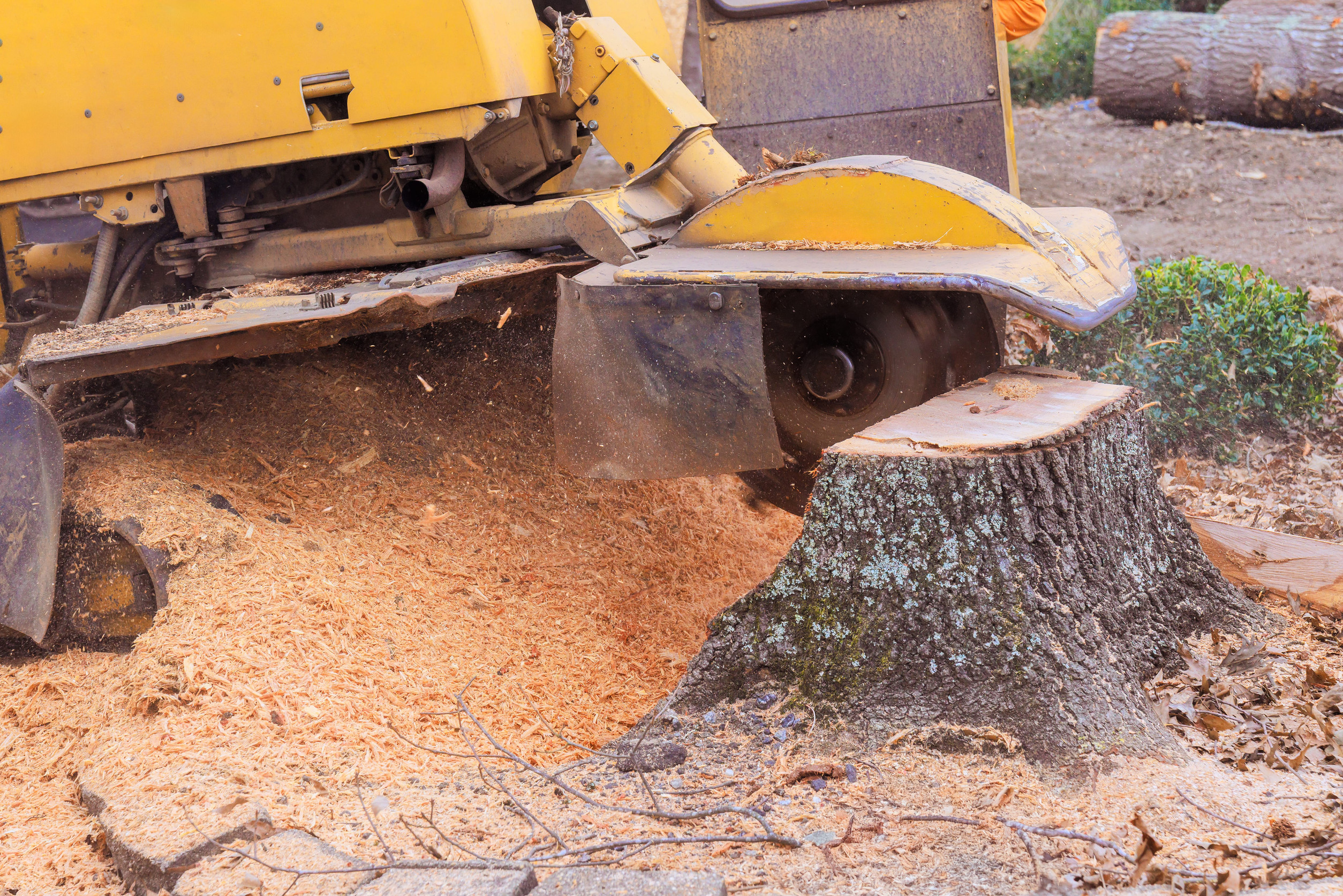
Removing What’s Left Behind After Tree Removal
Tree removal solves one problem and creates another — the stump. A stump in the yard makes mowing difficult, attracts termites and other pests, and can regrow shoots if left alone. For many homeowners, a stump is a nuisance. For others, it’s a safety hazard or a barrier to a landscaping project. Either way, stump grinding is the practical solution.
Arrow Landscaping & Designs provides stump grinding throughout Fort Myers, Naples, and the surrounding Southwest Florida communities. We grind stumps below ground level, clean up the debris, and leave you with a usable patch of ground for sod, landscaping, or paving.
What Stump Grinding Actually Does
Stump grinding uses a specialized machine with a rotating cutting wheel to grind the stump down below the surface of the soil. The machine moves across the stump area, and as a result, it gradually reduces the wood to chips that mix with the surrounding soil.
The goal is to remove enough of the stump that:
-
You can mow over the area without hitting anything
-
You can plant grass, shrubs, or a garden on top
-
You can install a patio, driveway, or hardscape feature without obstruction
-
The stump won’t send up new shoots
-
Pests and fungus won’t use the wood as a habitat
Grinding typically goes down 6 to 12 inches below grade, depending on the stump and your goals for the area. If you plan to replant trees in the same spot, we can grind deeper.
Grinding vs. Removal: What’s the Difference?
People often use the terms interchangeably, but they describe two different services.
Stump removal means physically extracting the stump and its root ball from the ground. It’s a much bigger job because it requires heavy equipment, leaves a large hole, and disrupts the surrounding soil significantly. Removal typically costs more and takes longer.
Stump grinding is the more common approach. It leaves the stump and major roots in place but grinds the visible portion below grade. The result is a lawn or garden area that’s usable again without the expense and disruption of full removal.
For most homeowners, grinding is the practical choice. It costs less, takes less time, and achieves what most people want — a yard without a stump in it.
Signs You Need Stump Grinding
Most stumps should be ground eventually. Here’s when it becomes a priority:
-
Mowing difficulty — The stump interferes with the mower, or the mower blade keeps hitting it
-
New growth — The stump keeps sending up shoots that you have to cut back
-
Pests — You see termites, carpenter ants, or other insects using the stump as a nest
-
Fungal growth — Mushrooms or shelf fungus on the stump indicate decay that attracts pests
-
Landscaping plans — You want to add a patio, garden bed, or new tree in that spot
-
Safety — Someone could trip over or drive into the stump
-
Aesthetics — The stump is visible and looks untidy
If any of these apply, grinding is worth scheduling.
Our Stump Grinding Process
Every stump is different, but the process follows a consistent set of stages.
1. Assessment
We evaluate the stump’s diameter, location, species, and the surrounding area. In addition, we check for underground utilities, irrigation lines, or other buried features that could be affected.
2. Grinding
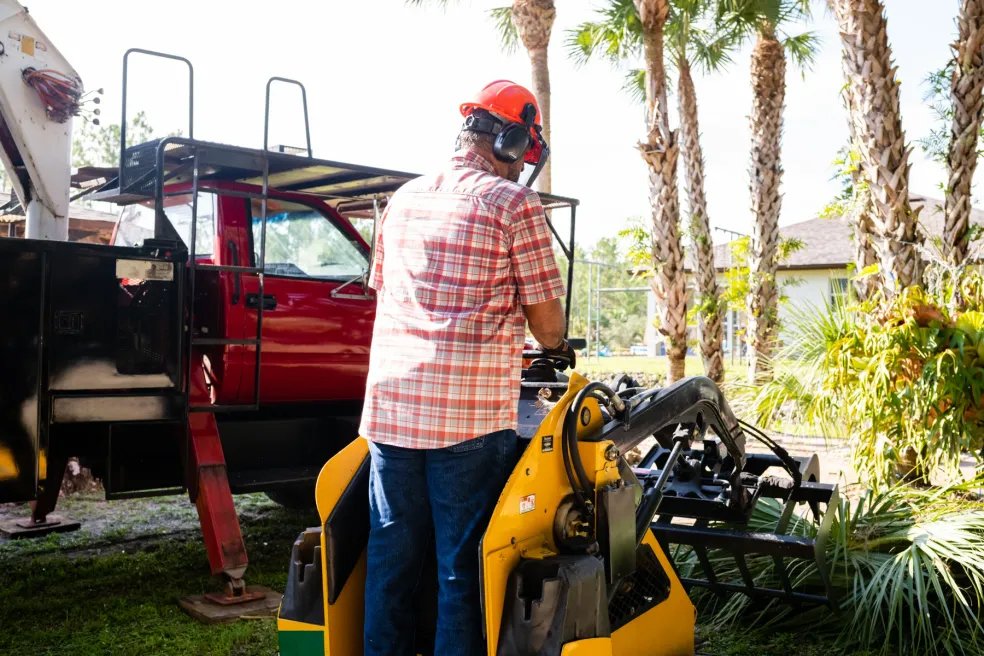
We use a stump grinder to cut the stump below grade. The grinding head works side to side, reducing the wood to chips. For larger stumps, we may need to make multiple passes.
3. Root Grinding
We also grind surface roots around the stump that could interfere with mowing or future landscaping. If the roots are extensive, we can grind them as far as practical.
4. Cleanup
We rake the area and remove or spread the wood chips depending on your preference. Some clients want the chips hauled away, while others prefer to keep them as mulch.
5. Optional Backfill
Grinding leaves a hole with a mixture of soil and wood chips. If you plan to plant or sod, you may want us to bring in topsoil to level the area. Let us know if you’d like this included.
What Affects the Cost of Stump Grinding
No two stumps are the same, so pricing varies. Here’s what affects the cost:
-
Stump diameter — Larger stumps take longer to grind and require more passes
-
Stump height — A tall stump requires more grinding than one cut close to the ground
-
Depth of grind — Grinding deeper takes longer than grinding shallow
-
Root spread — Grinding surface roots adds time and complexity
-
Access — Stumps in tight spaces or behind fences are harder to reach with equipment
-
Number of stumps — Multiple stumps on the same property are often more cost-effective per stump
-
Debris removal — If you want the chips hauled away, that adds cost
We provide a clear estimate before work begins so there are no surprises.

What to Do Before We Arrive
A few things help the process go smoothly:
-
Mark any buried utilities — Sprinkler lines, cable lines, and electrical conduits in the area
-
Clear the area — Move potted plants, decorations, or debris away from the stump
-
Remove vehicles — Keep cars and trailers out of the work zone
-
Let pets inside — For their safety and ours, keep pets indoors during grinding
-
Know your plans — If you plan to replant or pave the area, tell us so we can grind to the right depth
What to Expect After Grinding
Once we finish, the area will have:
-
A hole filled with wood chips and soil — You can leave it as-is, or we can backfill with topsoil
-
No visible stump — The stump is gone below grade
-
Possible settling — Over the next few months, the ground may settle as the chips decompose. Adding more soil is normal.
If you plan to sod or plant, wait a few months for the chips to break down further, or add a layer of topsoil on top before planting.
Residential Stump Grinding
Homeowners call us for stump grinding in a range of situations:
-
After a tree removal leaves a stump behind
-
After a storm knocks down a tree
-
When a stump is making mowing difficult
-
When a stump keeps sending up shoots
-
To prepare an area for sod, a garden, or landscaping
-
To remove stumps before selling a property
We work carefully around landscaping, irrigation systems, and hardscaping so the rest of your yard stays untouched.
Commercial Stump Grinding
Commercial properties often have multiple stumps or larger stumps that need grinding. Whether you manage an HOA, an apartment complex, a golf course, or a development site, keeping stumps cleared is part of maintaining a safe, usable property.
How we help commercial clients:
-
Site clearing — Removing stumps from land being prepared for construction or landscaping
-
HOA and common areas — Clearing stumps from shared spaces and easements
-
Storm cleanup — Grinding stumps after fallen trees have been removed
-
Landscaping projects — Preparing sites for sod, hardscape, or new plantings
We coordinate with your schedule to minimize disruption.
Frequently Asked Questions About Stump Grinding
How deep does stump grinding go?
Typically 6 to 12 inches below grade. If you plan to replant in the same spot, we can grind deeper.
Will the stump regrow after grinding?
Once the stump is ground below grade and the crown is removed, regrowth is unlikely. Some species may send up shoots from larger lateral roots, but these are usually manageable with mowing.
What happens to the wood chips?
They mix with the soil in the hole. You can leave them, mix them with topsoil, or we can haul them away.
Can you grind stumps in tight spaces?
Yes, if there’s enough room for the machine to access the area. If the stump is behind a fence or in a narrow yard, we may need to use a smaller grinder or approach it from a different angle.
How long does stump grinding take?
A single stump usually takes 30 minutes to 2 hours depending on size, depth, and access.
How much does stump grinding cost?
Cost depends on the stump’s size, depth, and access. We provide a clear estimate before work begins. Contact us to discuss your stumps.